




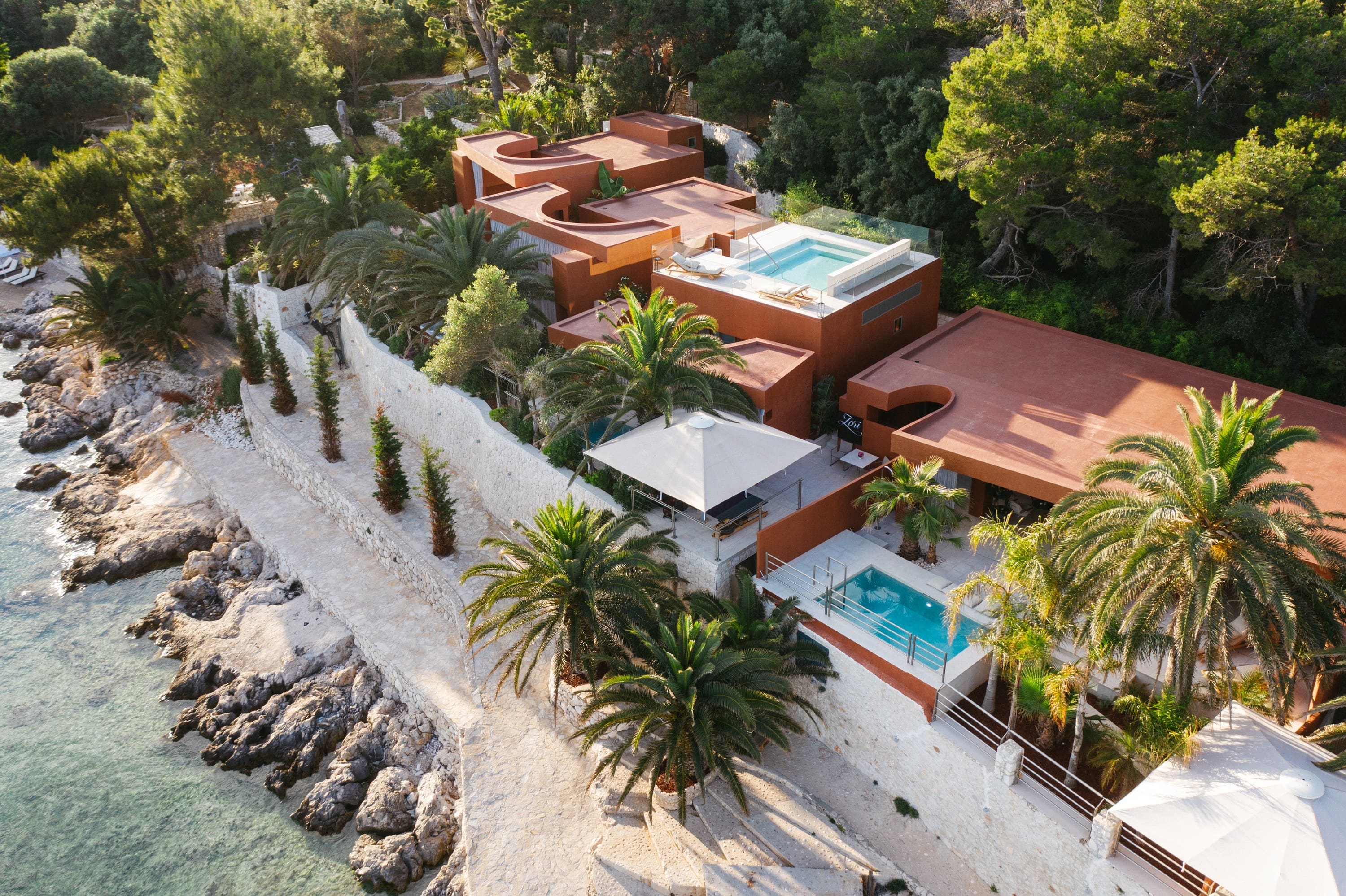
A field guide from Vinogradišće bay · Summer 2026
You arrive by boat. There is no other way, and after a day or two you realise that is not an inconvenience.
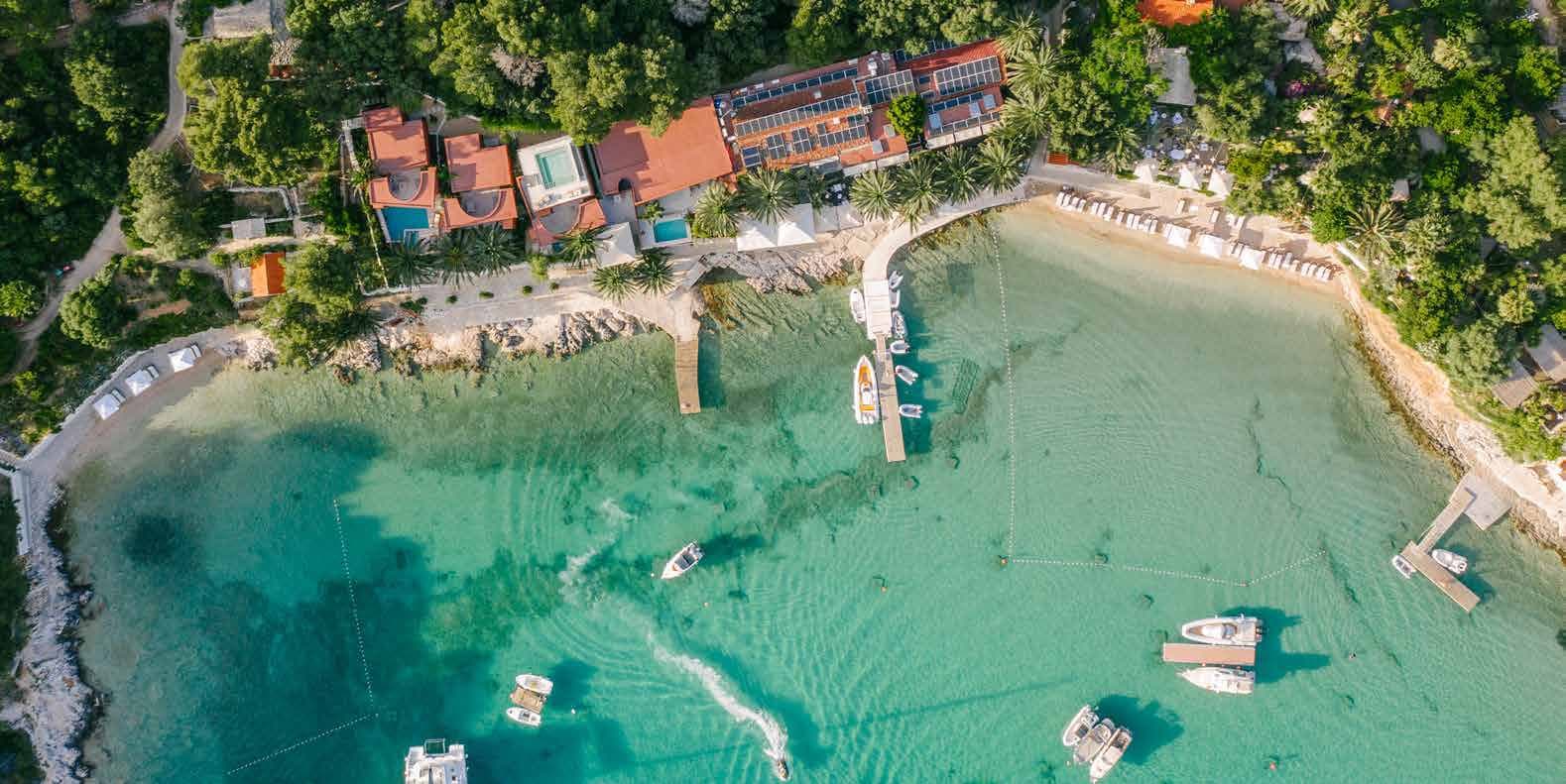
Hvar sits in the central Dalmatian archipelago, reachable from Split airport in roughly ninety minutes by road and catamaran. The season runs May through October, the sea reaches 26 °C in August, and the island divides between Hvar town's harbourfront and the quieter western bays of the Pakleni Islands. Ten minutes by boat from Hvar town, Palmižana holds Vinogradišće bay: no cars, pine over stone, and a restaurant that has been writing its daily card from the morning catch since 1947.
How do you actually get to Hvar?
The most direct route is from Split airport (SPU): roughly ninety minutes in total, combining the drive into Split with a catamaran across to Hvar town. Catamarans run regularly through the season, and most guests travelling with luggage find the high-speed passenger service the cleanest option. If you are arriving by yacht, you will come in through the Pakleni channel, which makes the question of getting to Hvar rather more agreeable.
Once you are in Hvar town, Palmižana is a further ten minutes by water taxi or private boat. There are no cars on the island, which is worth knowing before you pack. The ACI Marina Palmižana sits a short walk through the pine from Vinogradišće bay, so those arriving by boat can be swimming before the engine has cooled.
When is the right time to come?
The season on Hvar runs May through October, with the sea temperature rising from around 23 °C in June to 26 °C at the height of August, then settling to a comfortable 24 °C through September. June and September are the months we find ourselves recommending most often: the sea is warm, the crowds in Hvar town have not yet peaked or have already thinned, and the light in the late afternoon does something to the stone and the pine that is harder to catch in July.
August is fully committed. Hvar town hums, the channel fills with boats, and the terrace at dinner becomes a thing worth planning ahead. If the energy of high summer is what you are after, it delivers. If you would rather have the bay largely to yourself, May or the first two weeks of October reward the slightly earlier or later traveller without asking much in return.
The Pakleni Islands and Palmižana: a bay apart
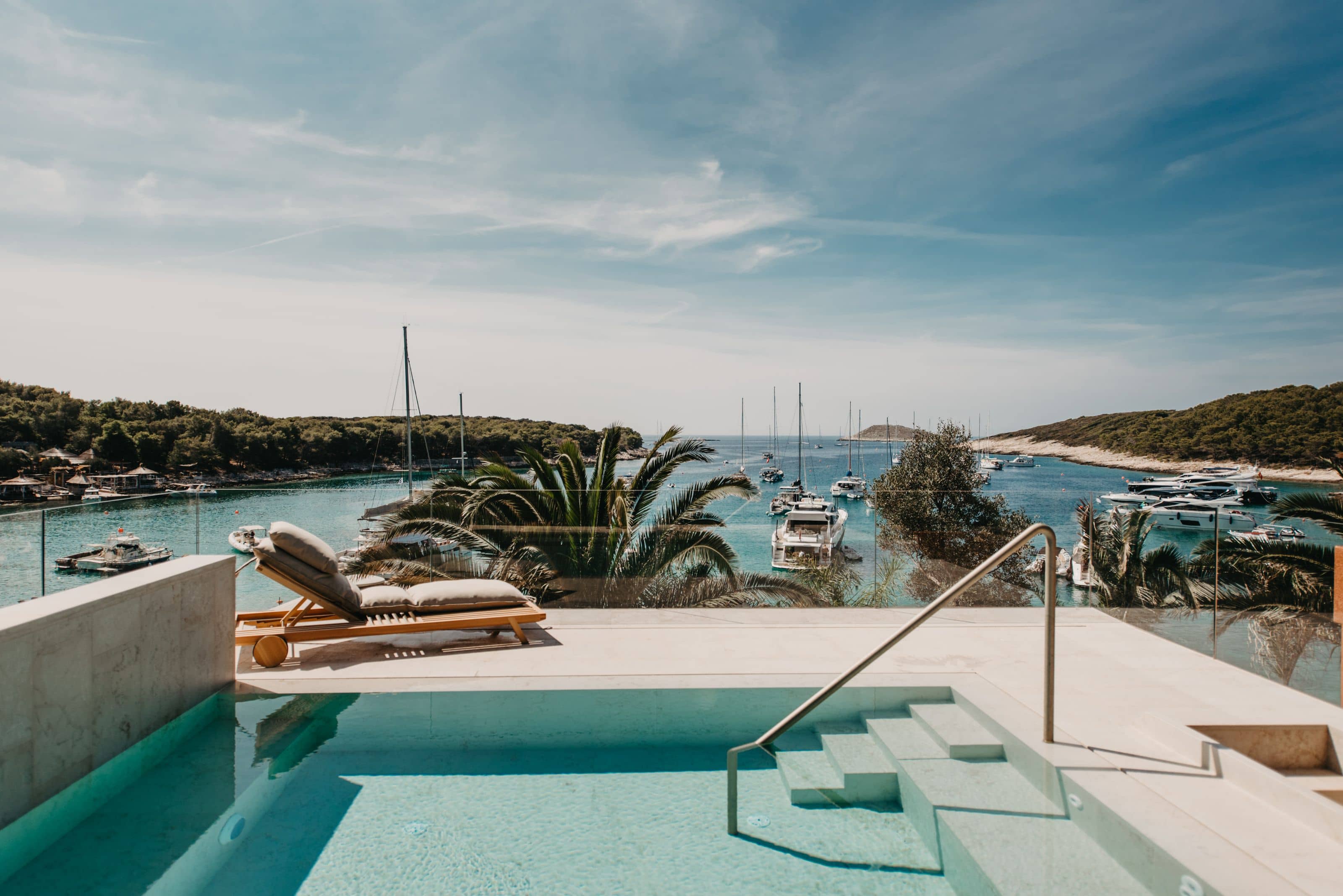
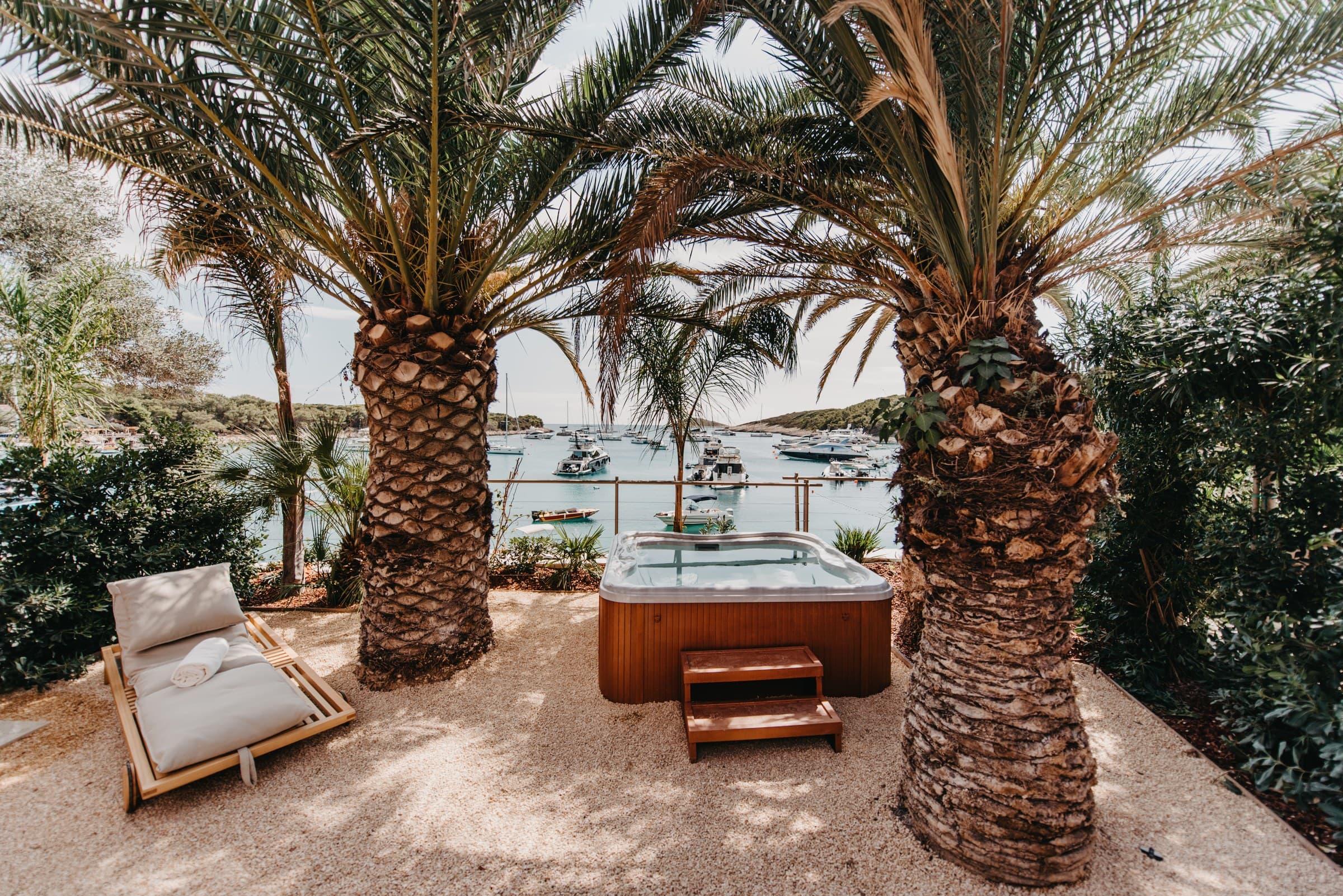
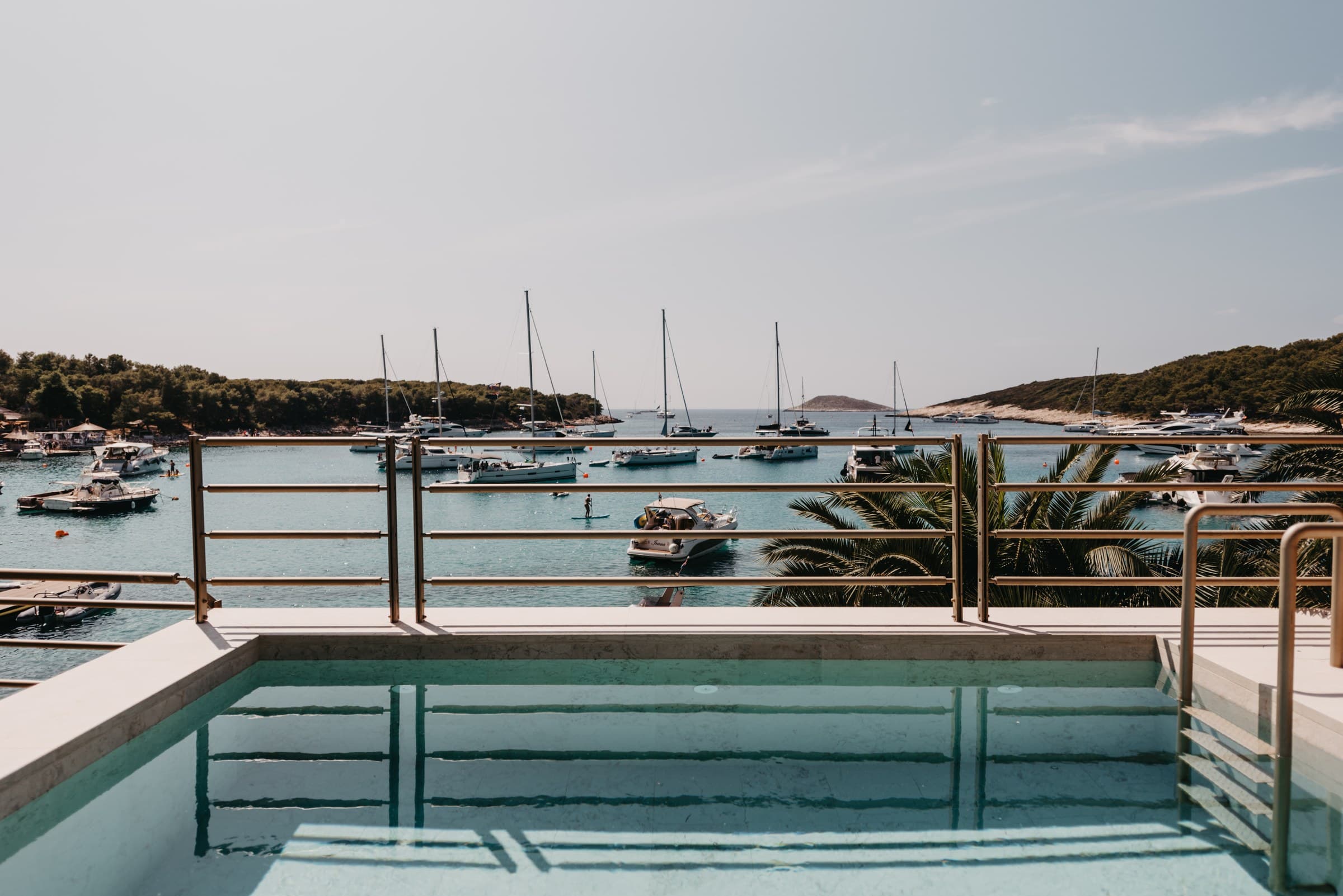
The Pakleni Islands lie just off Hvar town, and Palmižana on Sveti Klement is the largest and most visited of them, though most visited is relative when the island has no roads. Vinogradišće bay faces south-east, which means the maestral arrives by noon most summer days and makes the afternoons on the water manageable. The pine comes down to the stone almost everywhere, and the paths between the coves are quiet enough that you can walk them without meeting anyone.
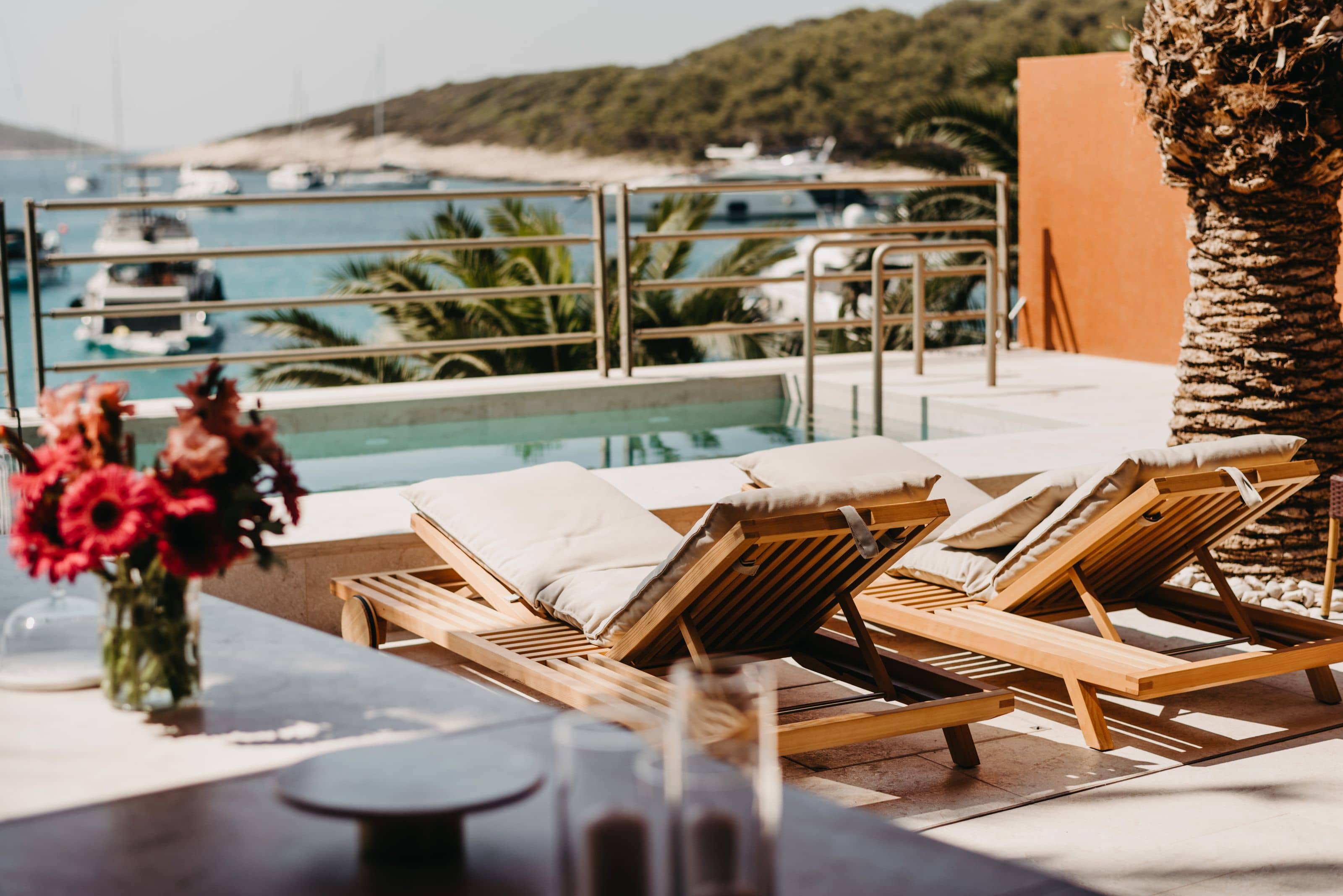
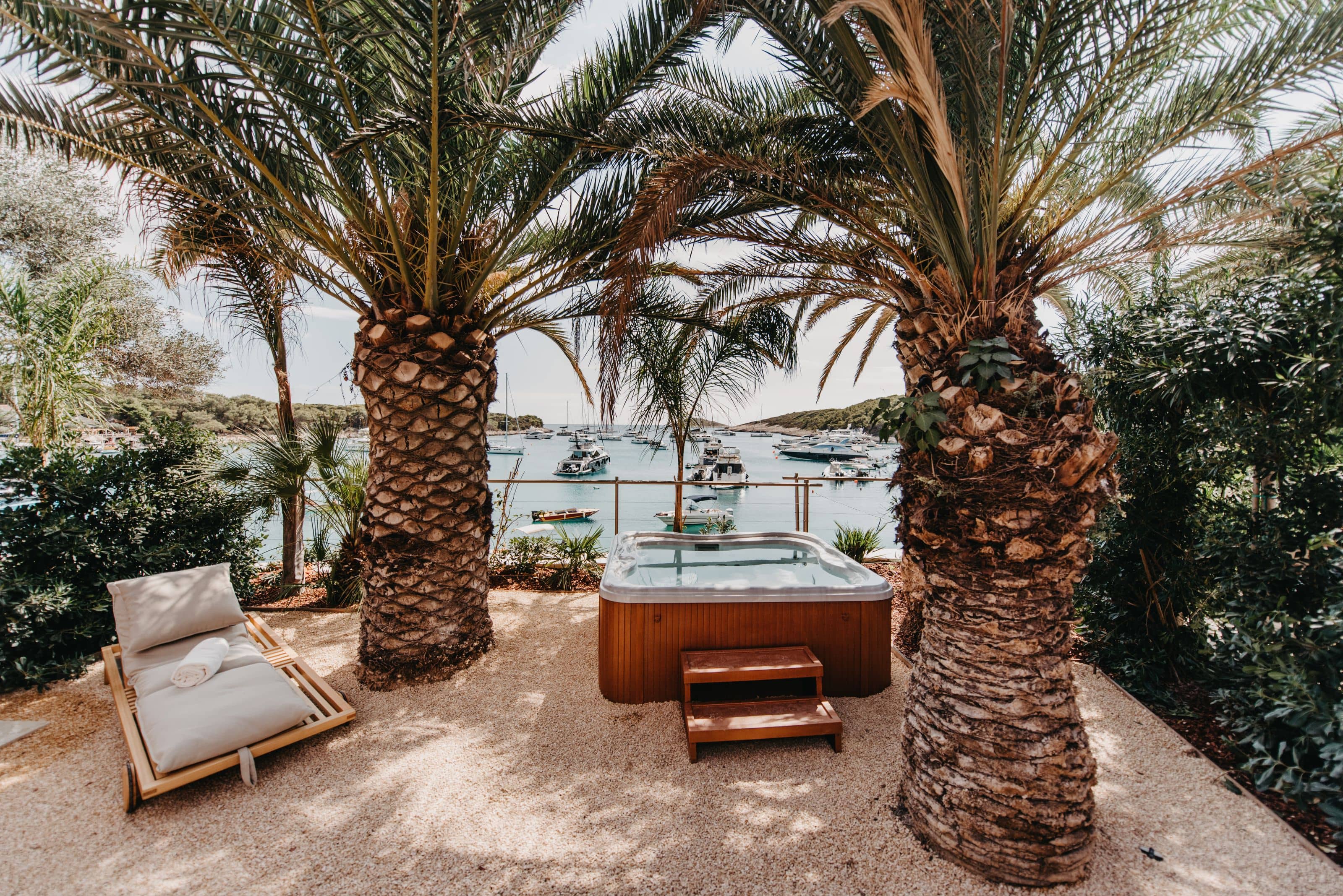
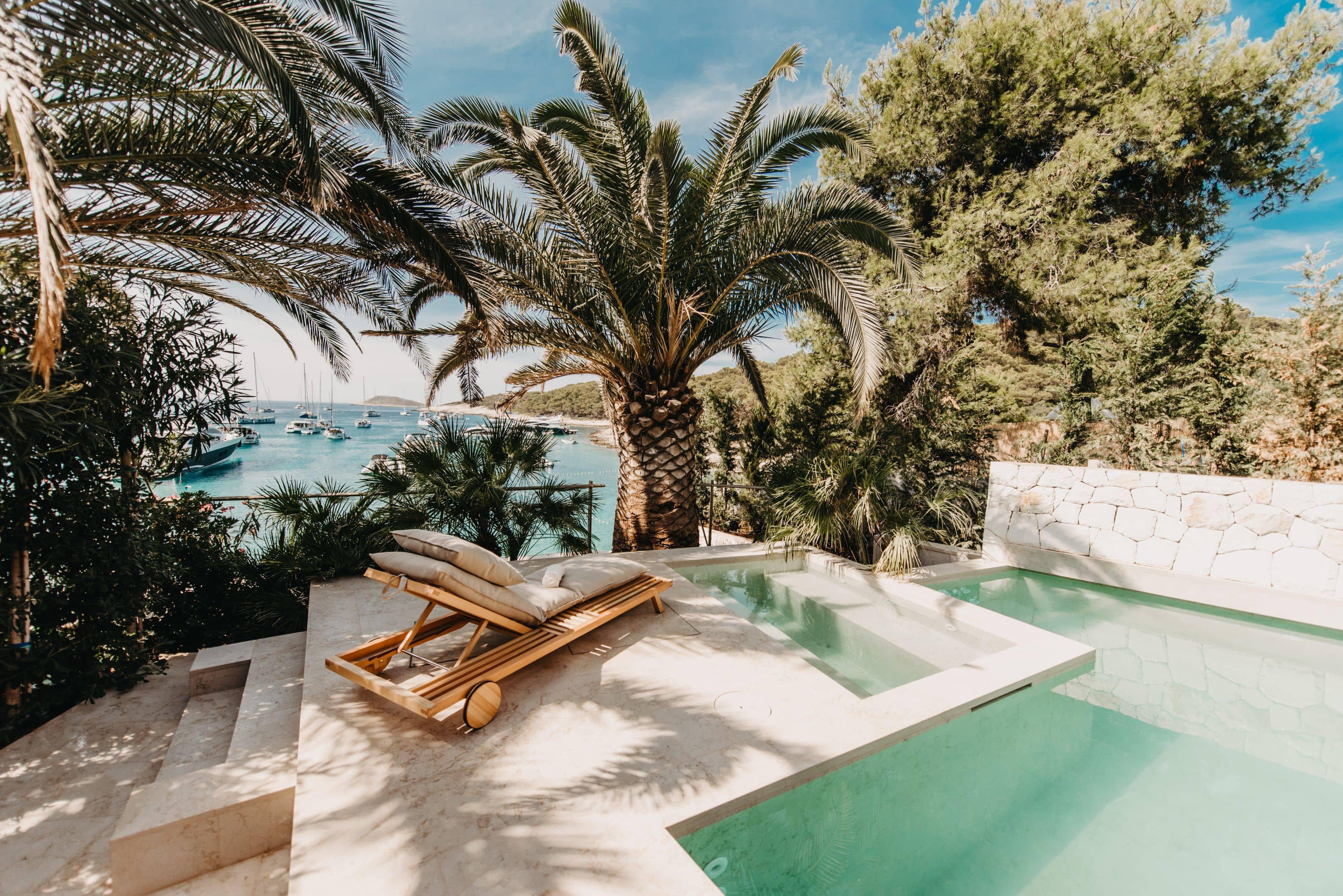
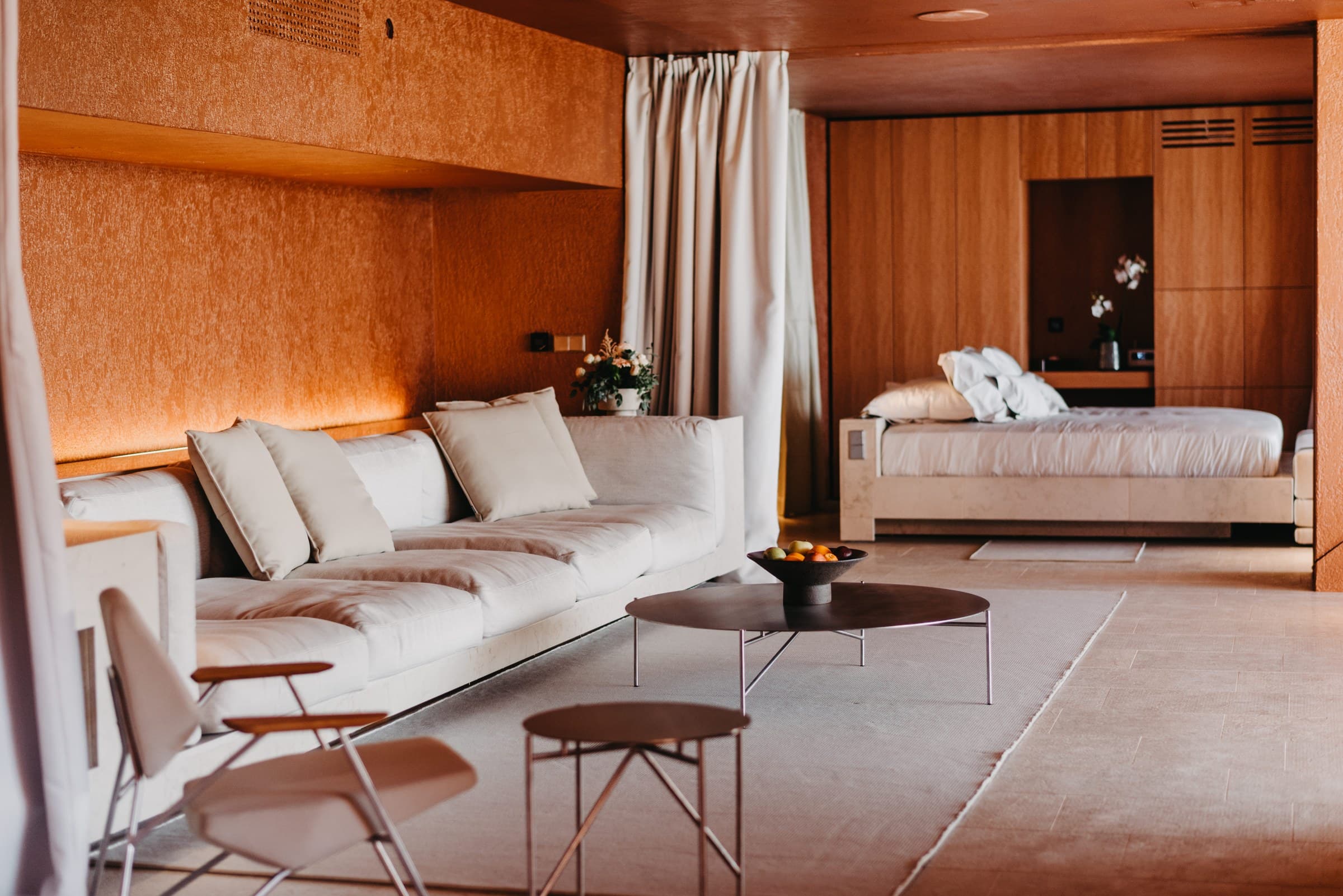
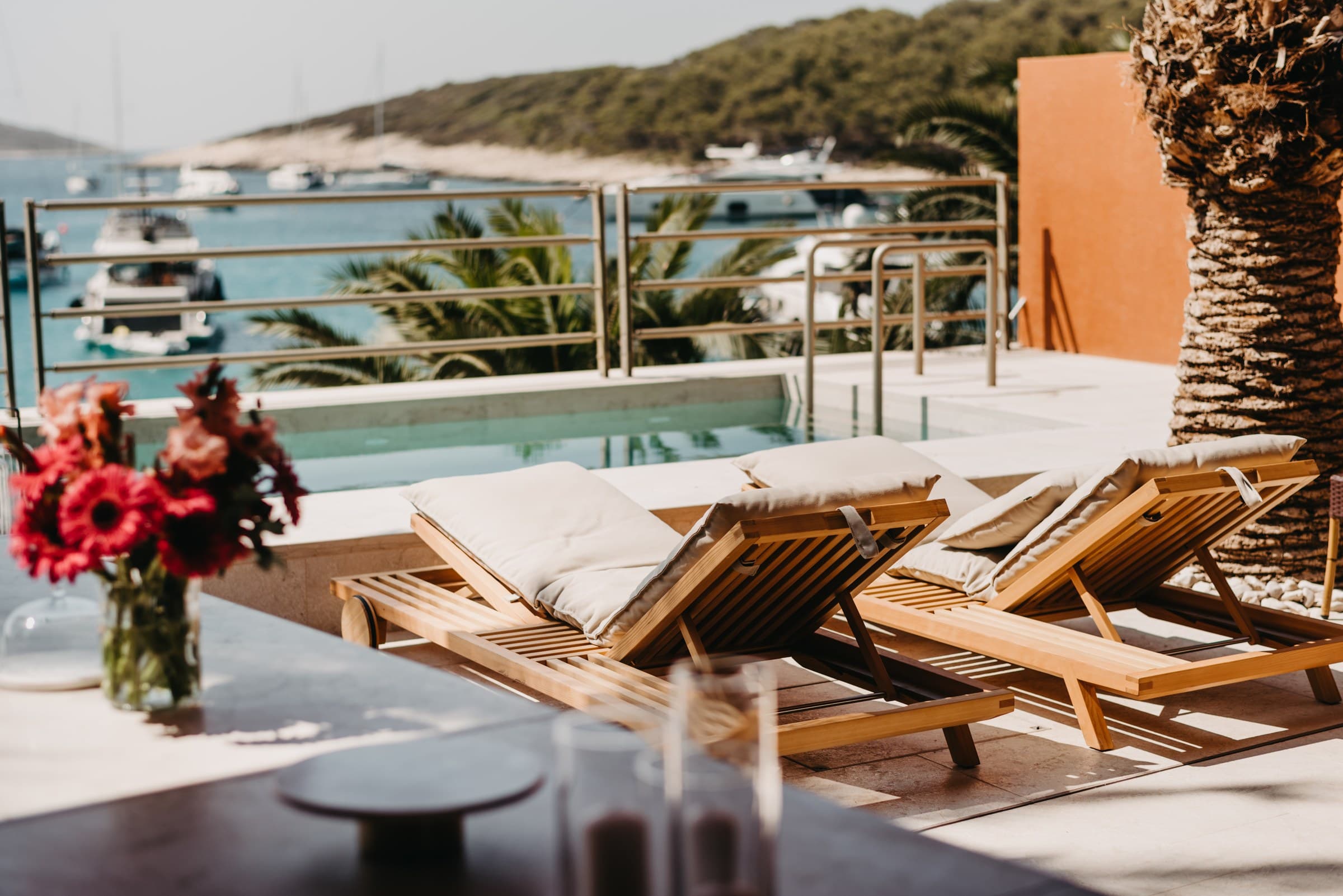
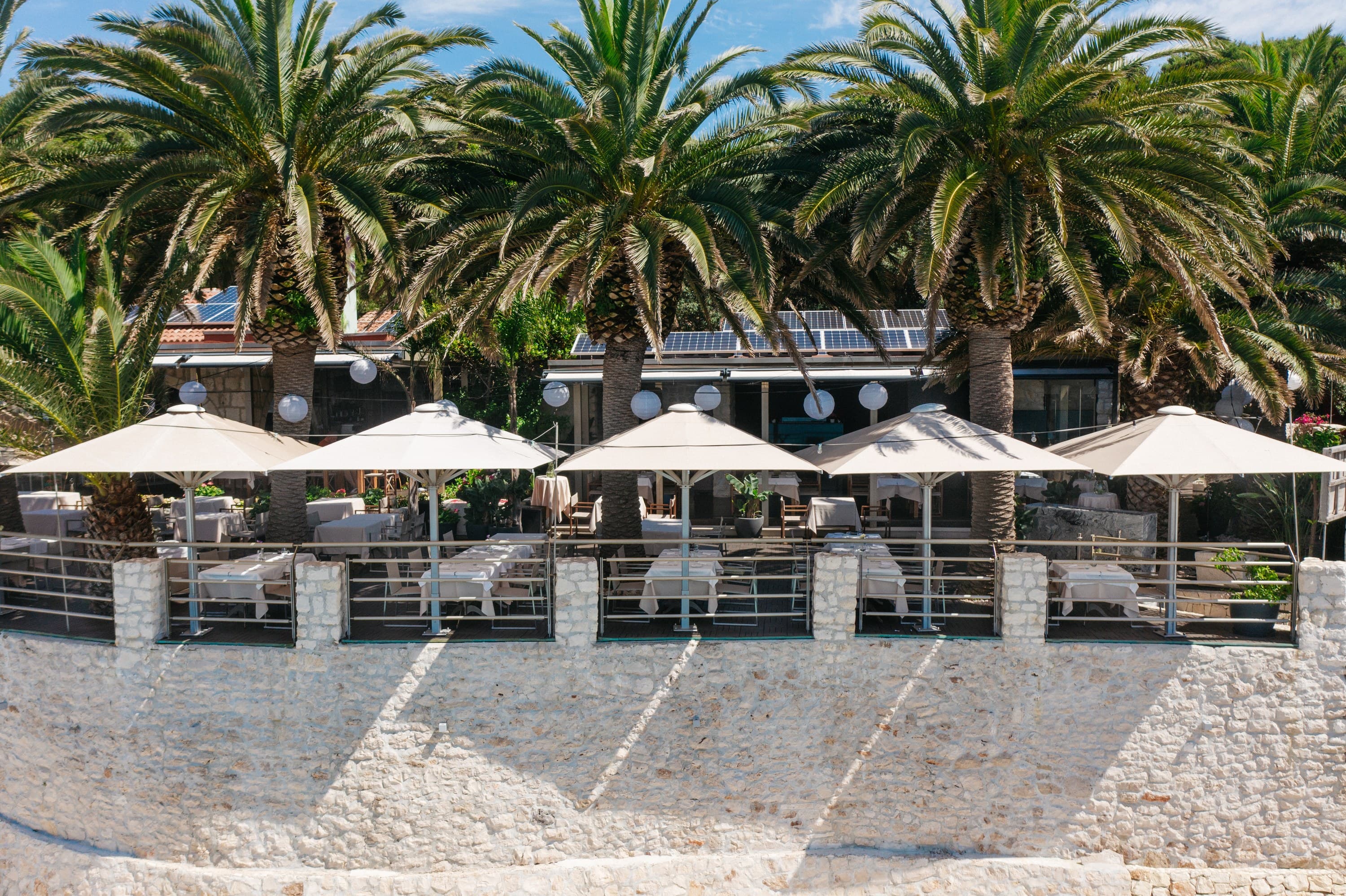
Zori Timeless holds four private residences on Vinogradišće bay: Infinity, Cloud, Eternity, and Horizon, each kept for one party at a time. Together they sleep around sixteen guests, though the four houses are also available as an exclusive-use estate for larger gatherings. The restaurant below them has been here since 1947, which makes it one of the older continuous presences in the Pakleni. Chef Siniša Jevrosimov writes the card each morning from what the boats bring. No printed menu. No dish decided the day before.
What does a stay on Palmižana cost?
A residence at Zori starts from €1,225 per night for the whole house, so the rate is for one private party rather than per person. Cloud, Eternity, and Horizon each sleep two; Infinity sleeps up to six, including two children. Dinner at the restaurant tends to run between €70 and €110 a head for the à la carte card, or from €120 for the tasting menu. These are published figures and do not move with the season.
A water taxi from Hvar town costs a fraction of the crossing, and the crossing is ten minutes. Most guests arrive once and leave when they must. The question most people are really asking is whether the privacy of a bay you do not share with strangers is worth the difference over a hotel room in town. The four houses answer that in one direction only. To see which weeks are open, you can write to the team and the conversation starts there.
Hvar town and what it offers beyond the bay
Hvar town is a harbour town with a fortress, a sixteenth-century cathedral, and a main square that fills completely from June onwards. It is worth an evening, and the walk up to the Španjola fortress gives you the whole channel laid out below. The Venetian loggia, the Arsenal, the narrow lanes running back from the riva: the architecture is genuinely old and genuinely cared for, which puts it in a different category from a number of Dalmatian ports polished into decoration.
The island stretches east toward Stari Grad, which is quieter, older in parts, and home to an agricultural plain the ancient Greeks laid out that still keeps roughly the same field lines. For guests at Zori, Hvar town is where you go for an evening or an afternoon when the bay feels almost too still. Ten minutes each way keeps it at the right distance.
We are ten minutes from Hvar by boat, and further by temperament.
How far is Hvar from Split airport?
Roughly ninety minutes in total, combining the drive or bus into Split with the catamaran crossing to Hvar town. The catamaran runs regularly through the season from May to October. Water taxis are also available from Split harbour for a faster, more direct crossing.
Do I need a car on Hvar?
In Hvar town, a car is more nuisance than help. On Palmižana, there are no cars at all: the island has no roads. Most guests on the Pakleni Islands travel entirely by boat, which is the correct way to move through an archipelago.
What is the sea temperature around Hvar?
Around 23 °C in June, 26 °C in August, and roughly 24 °C through September. October is cooler but still swimmable for most of the month, particularly in the sheltered bays of the Pakleni Islands.
When is the quietest time to visit?
May, early June, and September are the months where the island is most itself: warm, open, and not yet at capacity. August is the height of the season and delivers full energy in Hvar town. For a morning swim with nobody watching, September is probably the honest answer.
What is Palmižana and how does it differ from Hvar town?
Palmižana is the colloquial name for the western end of Sveti Klement, the largest of the Pakleni Islands, ten minutes by boat from Hvar town. Hvar town is a working harbour with hotels, restaurants and a visible social life. Palmižana is pine, stone, and water, with almost no infrastructure beyond the marina and a handful of restaurants. Zori Timeless holds four private residences there, on Vinogradišće bay.
Is the Zori restaurant open to guests staying elsewhere?
Yes, though tables fill quickly through July and August. Chef Siniša Jevrosimov writes the menu daily from the morning catch, so there is no printed card and no dish decided in advance. Lunch runs from 12:00 to 15:00 and dinner from 18:30 to 23:30.
Zori Timeless