







A field guide from Vinogradišće bay · Autumn 2026
You are somewhere between Split's ferry terminal and the open Adriatic, and the island is already visible. What follows is what you need before you board.
The ferry from Split to Hvar Island Croatia runs two main routes: a fast catamaran to Hvar town (roughly one hour) and a car ferry to Stari Grad (about two hours). Both run year-round, with more frequent departures from May through October. Once in Hvar town, Palmižana and Vinogradišće bay are ten minutes further by water taxi or private boat. If you are heading to Zori, you do not need a car at any point: there are no cars on the island.
The two routes: catamaran to Hvar town, or car ferry to Stari Grad?
The catamaran to Hvar town is the faster crossing, around one hour from Split's main passenger terminal, and it carries passengers only. No cars, no lorries. You sit on the open deck or below, the channel narrows, and the old town appears at the end of the approach. This is the route most guests arriving without a vehicle take, and it puts you closest to the water taxis that continue on to Palmižana.
The car ferry crosses to Stari Grad on the northern side of the island. The journey takes roughly two hours, and the ferry is larger and slower. Stari Grad is a quieter port and a handsome old town in its own right, but it is about half an hour by road from Hvar town. If you have a hire car and are touring the island, the Stari Grad crossing gives you more flexibility. If your final stop is Palmižana, the catamaran to Hvar town saves you the road transfer and the car altogether.
How often do ferries and catamarans run?
Jadrolinija, the Croatian state ferry company, operates the majority of crossings on both routes, with additional catamaran services from Krilo and TP Line in the summer months. In the peak season, May through October, catamarans to Hvar town typically depart Split several times a day, from early morning through to late evening. The car ferry to Stari Grad runs multiple times daily through the summer and less often in winter.
Timetables change each season, so it is worth checking the Jadrolinija website directly before you travel, particularly for early morning or late evening departures. Booking ahead on the catamaran in July and August is sensible; the boats fill, especially on weekends. The car ferry rarely sells out for foot passengers, but vehicle space goes quickly in high summer. We generally advise guests arriving at Zori to take the catamaran to Hvar town, leave the car in Split, and continue from Hvar by water taxi. It simplifies the arrival considerably.
What does the crossing cost?
The passenger catamaran from Split to Hvar town costs roughly €6 to €12 one way per person, depending on the operator and the season, though prices shift annually so check at the point of booking. The car ferry to Stari Grad is cheaper per person as a foot passenger, typically €5 to €9, but carrying a vehicle adds substantially to the fare based on the vehicle's length.
For guests arriving by private boat or yacht, the ACI Marina Palmižana is a few minutes' walk through the pines from Vinogradišće bay, and mooring can be arranged directly with the marina. The bay at Palmižana also has a mooring field. From Hvar town, water taxis run to Palmižana throughout the day in season; the fare is a few euros and the crossing, as noted, is ten minutes.
Getting from Hvar town to Palmižana
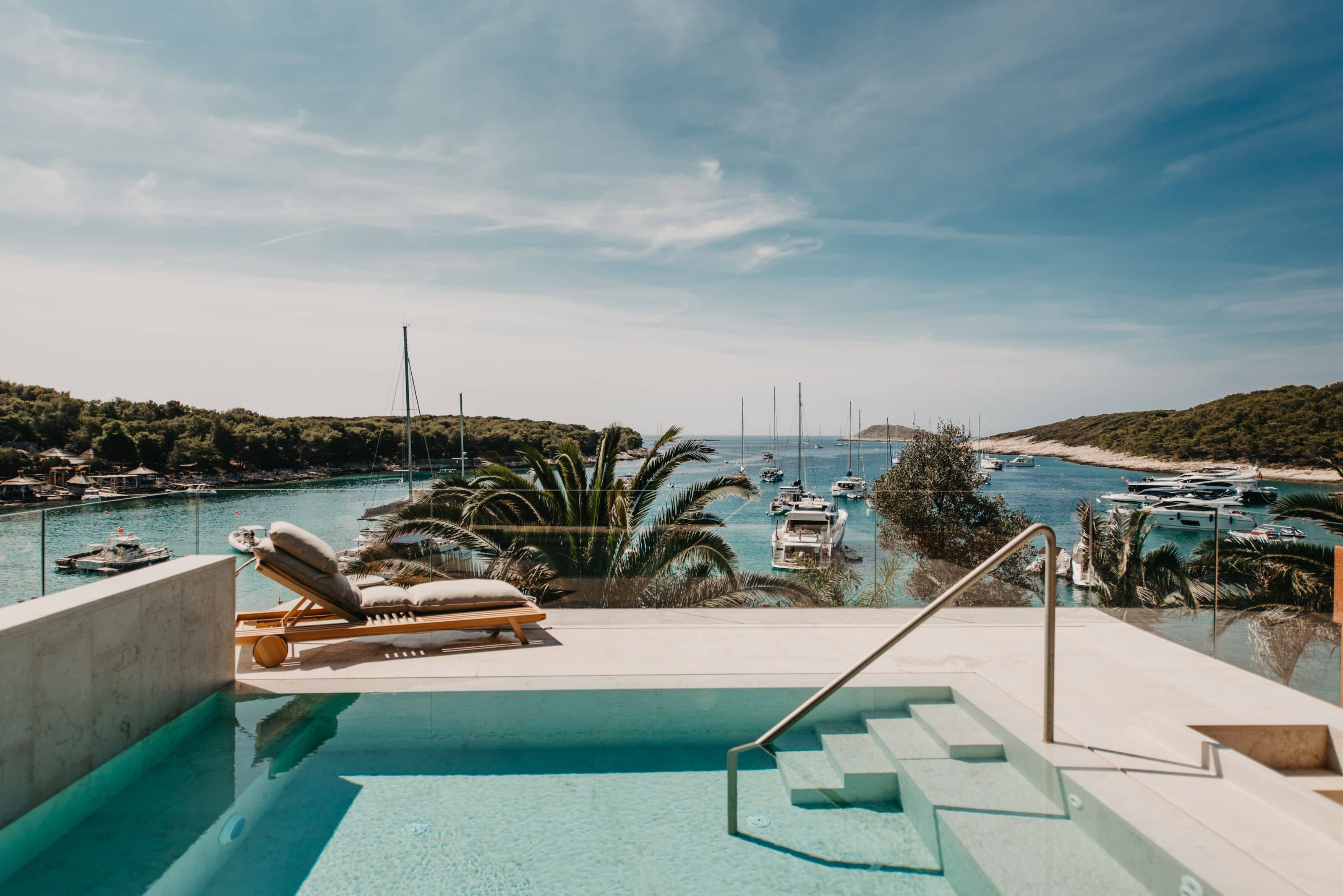
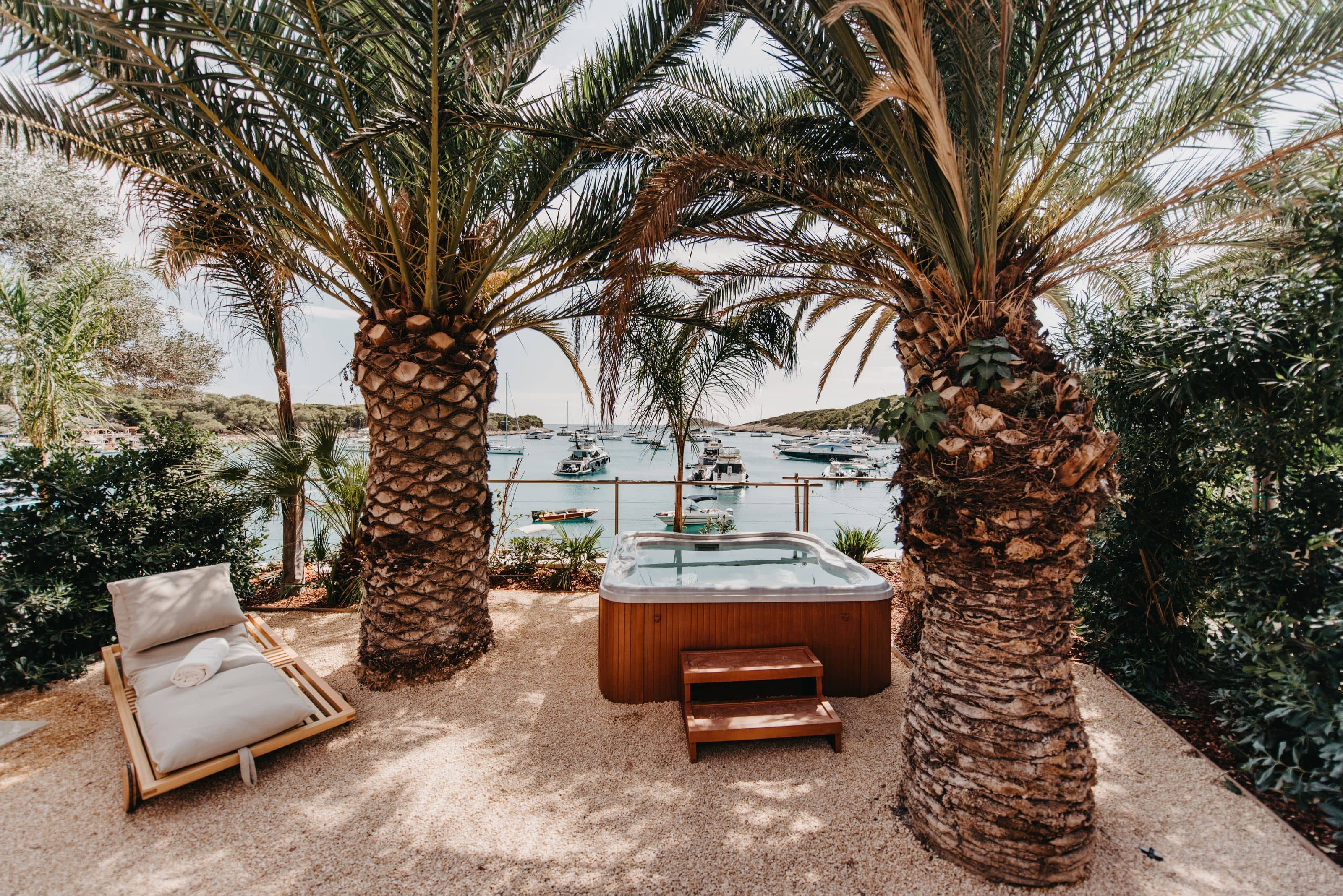
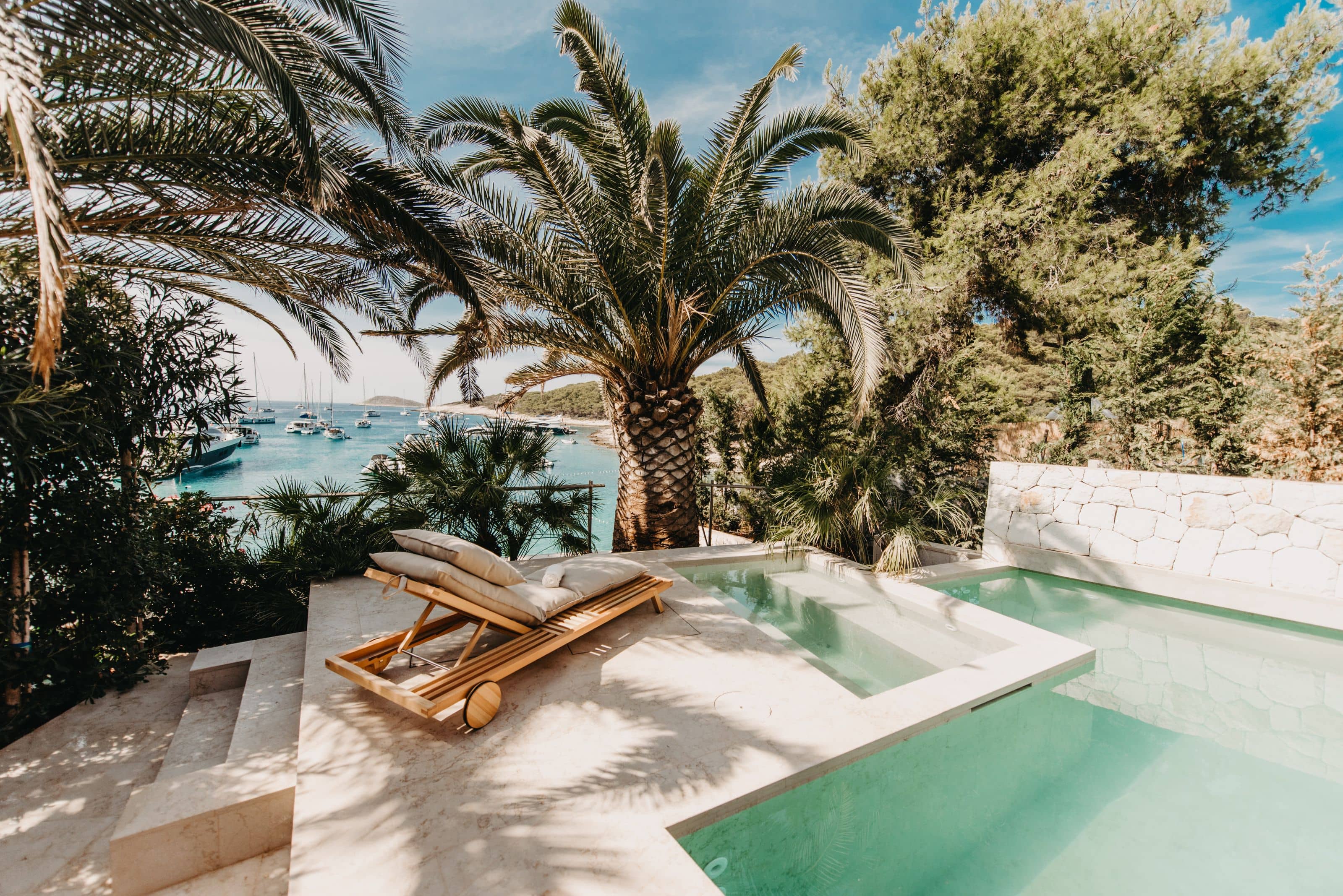
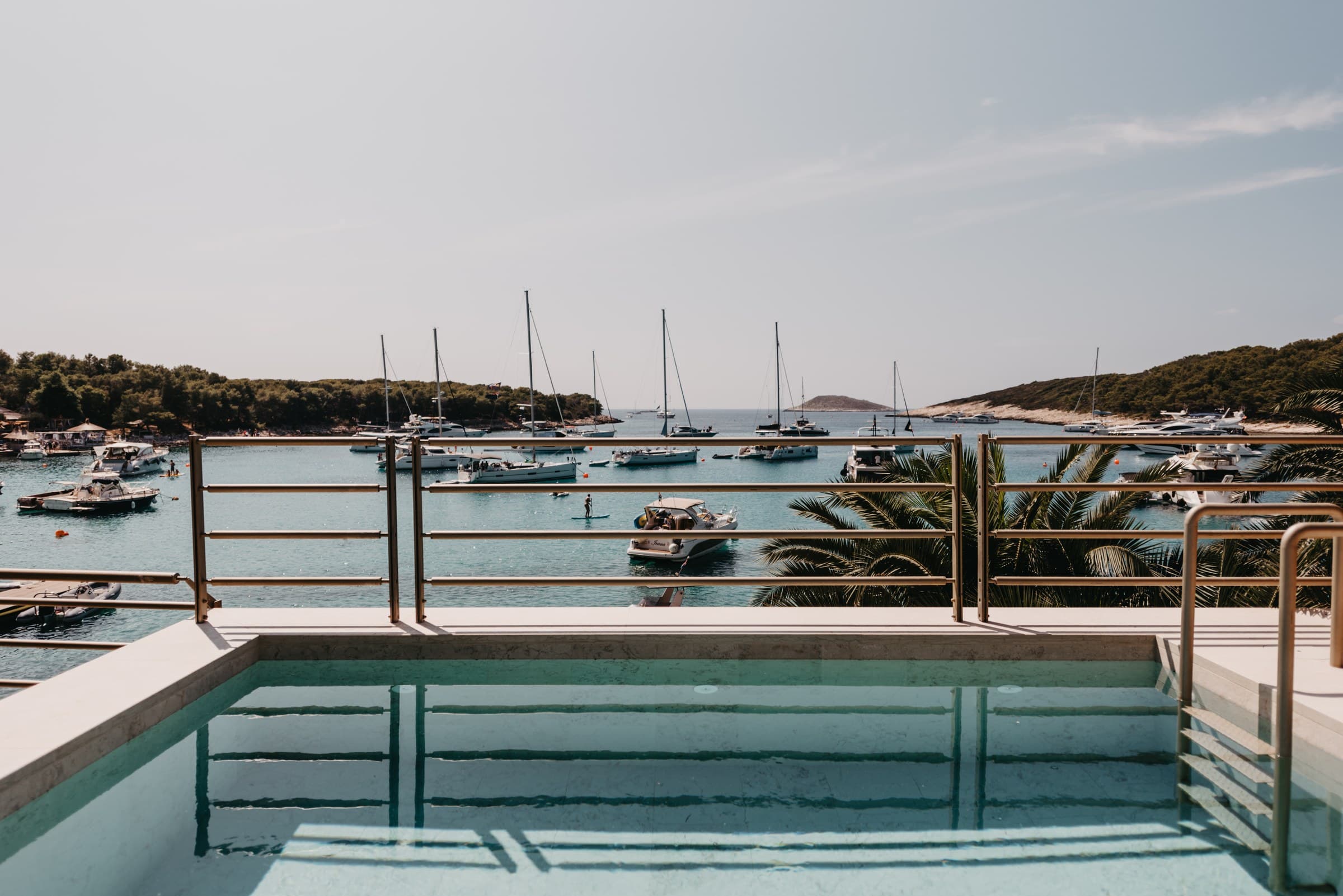
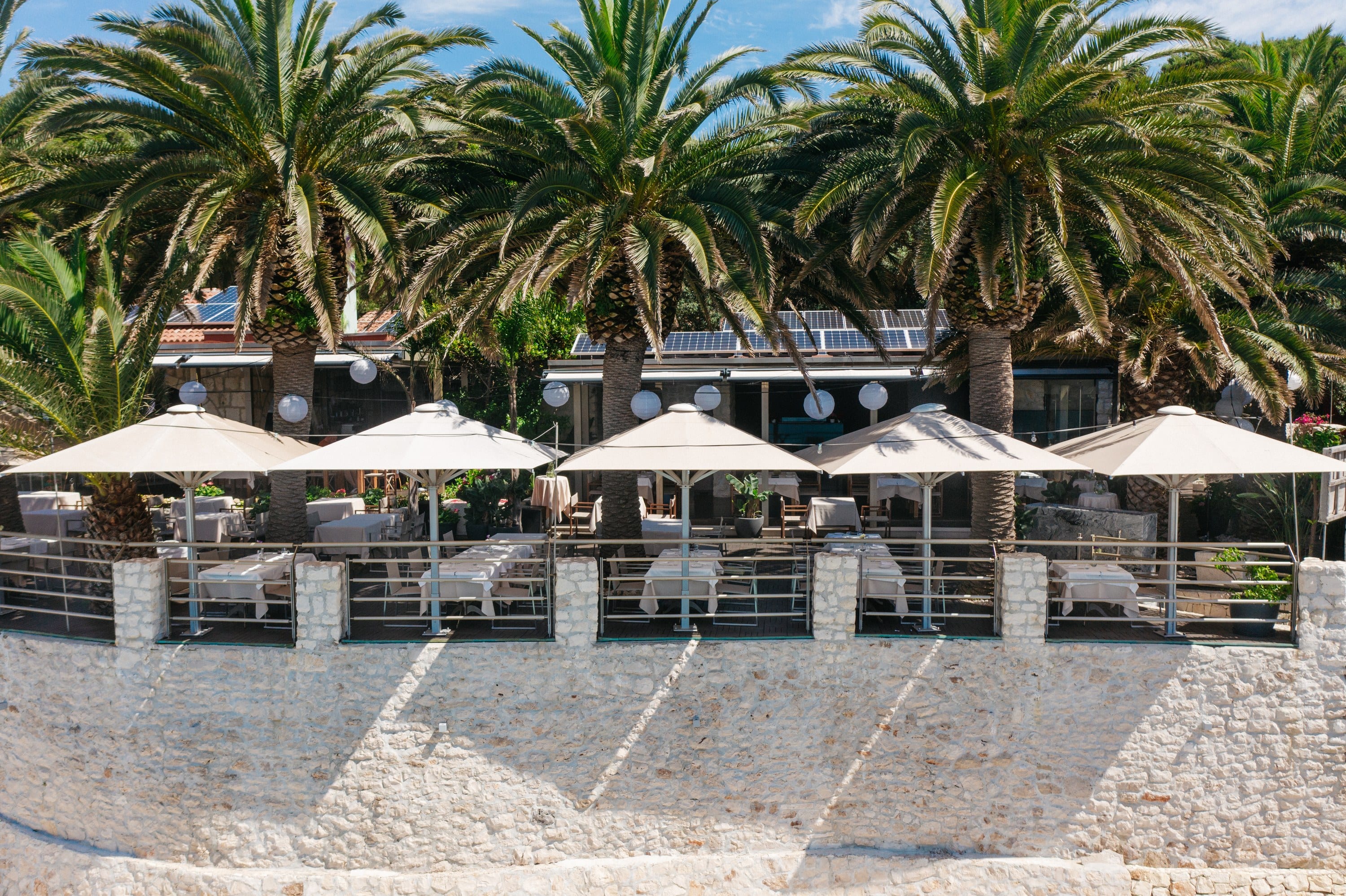
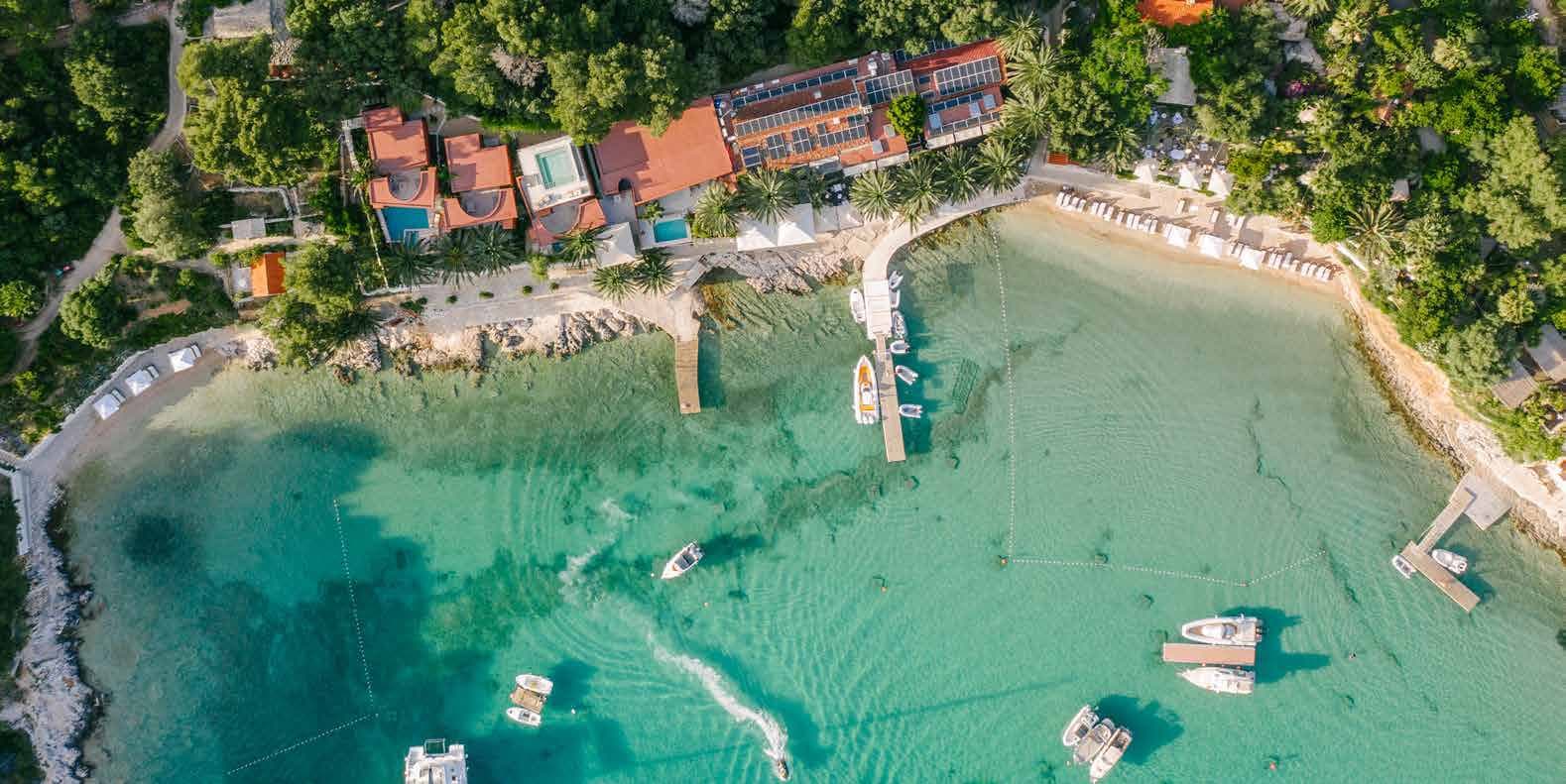
From Hvar town to Palmižana is ten minutes by water taxi or private boat, and it is where the journey changes register entirely. The noise of the port drops behind you, the Pakleni Islands open up ahead, and by the time you reach Vinogradišće bay you are somewhere quieter than anything the main island offers. There are no cars on Palmižana. There has not been a reason for one since the restaurant opened on the bay in 1947.
Water taxis leave from the harbour in Hvar town and run regularly through the summer months. You can usually find a boat within a few minutes of arriving at the waterfront. If you are staying at one of the four Zori residences on Vinogradišće bay, the house can arrange a private transfer from Hvar town; it is worth confirming before arrival, particularly if you have luggage. In the evening, the same boats bring guests back from Palmižana after dinner at the restaurant on the bay, and the return crossing, with the lights of Hvar ahead, is one of the quieter pleasures of being on this island.
If you are arriving via Split airport, the practical route is: Split by road or taxi to the ferry terminal, catamaran to Hvar town (about one hour), water taxi on to Palmižana (ten minutes). Door to water is roughly two to two and a half hours in total, assuming a smooth connection. The nearest airport is Split, approximately 90 minutes from Hvar town when you include the crossing.
A note on timing and the season
The sea around Palmižana runs at about 23 degrees Celsius in June, 26 in August and 24 in September, which is the practical argument for timing your crossing during the middle months if you want the warmest water. The season at Zori runs May through October, and the crossings from Split are at their most frequent across those same months. In May and early June, the island is quieter and the ferry less crowded; in July and August, both are at their fullest.
The maestral, the afternoon wind from the northwest, picks up reliably around noon on most summer days. Open-deck crossings on the catamaran are cooler and livelier after midday, warmer and calmer in the morning. For guests who find sea conditions relevant, a morning departure from Split tends to give the smoothest day on both legs.
Ten minutes from Hvar town, and considerably further by temperament.
How long does the ferry from Split to Hvar town take?
The passenger catamaran takes approximately one hour. The car ferry to Stari Grad, on the northern side of the island, takes about two hours. Times vary slightly by operator and conditions.
Do I need to book the catamaran in advance?
In July and August, yes. The boats fill quickly, particularly on weekends. Outside peak season you can usually buy a ticket at the terminal on the day, but checking the Jadrolinija or Krilo websites beforehand is sensible regardless of when you travel.
Can I bring my car on the ferry to Hvar?
Vehicles travel on the car ferry to Stari Grad, not on the passenger catamaran to Hvar town. If you are heading to Palmižana, there are no cars on the island, so leaving your vehicle in Split and taking the catamaran is the simpler arrangement.
How do I get from Hvar town to Palmižana after the ferry?
Water taxis run from Hvar town harbour to Palmižana throughout the day in season. The crossing takes ten minutes. Guests staying at Zori can arrange a private transfer from the house; confirm this before arrival if you have luggage.
What is the nearest airport to Hvar and how long does the journey take?
Split airport is the nearest. The total journey from Split airport to Palmižana takes roughly two to two and a half hours: around 90 minutes from the airport to the ferry terminal, then the catamaran to Hvar town, then ten minutes on to Palmižana by water taxi.
Are there ferries from Split to Hvar in the off season?
Jadrolinija runs year-round crossings on both routes, though at reduced frequency outside the May to October season. If you are travelling in winter or early spring, check the current timetable directly with the operator before finalising dates.
Zori Timeless